Concord MA Gunite Pool Specialists
Gunite Pool Opening Service Concord MA
When it comes to gunite pool opening service in Concord MA, experience with concrete pools is everything. At Luxury Pools By MF, we provide expert gunite pool opening service designed specifically for the demands of concrete inground pools — protecting your plaster finish, your equipment, and your investment. We also provide professional pool closing service in Concord MA and complete gunite pool winterization to protect your pool through New England winters.
The team has helped many Concord homeowners, business owners, builders, property managers, and other individuals in the Greater Boston, MA area. After some research, we’re confident you’ll find us to be the right Gunite Pool Specialists to handle your outdoor project.

Luxury Pools By MF, a top-rated gunite pool builder specializes in:
-
-
- Custom Gunite Pool Design
- Custom Landscape Design
- Gunite Pool Installation
- Gunite Pool Renovation
- Pool Openings and Closings
- 3D Design Renderings
- Custom Spas
- Outdoor Kitchen / BBQ Installation
- Water Feature Design
- Unique Fire Pits
- Sunken Living Rooms
- Pool Houses and Outdoor Structures
- Amongst many other high-end services
-
Why It Matters
The Right Team Makes All the Difference When You Search for Pool Opening Service Near Me
Every spring, Concord MA gunite pool owners face the same question: who should I call for pool opening service near me? And every fall: who can I trust to close my gunite pool correctly before winter? The answer matters far more than most homeowners realize. A gunite pool represents a six-figure investment — and the way it is opened and closed each season directly impacts the lifespan of your plaster finish, the reliability of your equipment, and the quality of your water for the entire swim season.
At Luxury Pools By MF, our pool opening and closing service is built around a single principle: gunite pools deserve gunite specialists. We do not service vinyl liner pools. We do not service fiberglass pools. Every protocol, every chemical procedure, and every inspection checklist we use is calibrated specifically for concrete pool construction.
If you own a gunite inground pool in Concord MA, the sections below will tell you exactly what problems we solve, what you gain when you work with us, and why the difference between a generalist and a specialist could mean thousands of dollars in preventable repairs.
Pain Points for Gunite Pool Owners in Concord MA
These are the problems we hear from MA homeowners season after season — all of them preventable with the right service provider.
- ✗Green, cloudy water every spring — last year’s closing was not done properly and algae took over under the cover all winter
- ✗Cracked fittings and broken plumbing at opening — result of an incomplete winterization blowout that left water in the lines to freeze
- ✗Etched or permanently stained plaster finish — caused by improper water chemistry at closing, expensive and entirely avoidable
- ✗Can’t get a timely appointment — booked weeks out, you lose valuable weeks of your Concord MA swim season
- ✗Different technicians every visit — no continuity, no knowledge of your pool’s specific configuration from year to year
- ✗Generic protocols not designed for gunite — companies treating your concrete pool the same as a vinyl liner
- ✗Surprise repair bills at opening — damage a proper closing would have prevented entirely
- ✗No inspection or communication — service completed without flagging issues before they become major problems
Benefits of Our Gunite Pool Opening Service Concord MA
What you get every season when you work with a gunite pool specialist who builds and services concrete pools exclusively.
- ✓Crystal-clear water from day one — precise chemical balancing means you’re swimming sooner, spending less on chemicals
- ✓Plaster and finish protection — chemistry protocols calibrated for gunite finishes, preserving the life of your surface by years
- ✓Full equipment inspection included — thorough check of pump, filter, heater, shell, and plumbing before swim season
- ✓Zero winter damage at opening — when your pool is closed correctly, spring openings are clean and repair-free
- ✓Consistent team, every season — same technicians open and close your pool with complete knowledge of its history
- ✓Complete winterization peace of mind — every line blown out, every piece of equipment protected before we leave
- ✓Builder-level expertise on every visit — technicians who understand gunite construction from the steel framework up
- ✓Long-term investment protection — proper seasonal care extends the life of your finish, equipment, and shell by years
Talk to an Expert
We understand that sometimes you just want to talk before scheduling a consultation. Our team will gladly answer any of your questions or help you with any of your concerns.
Call Mike or Kristine today!
(508) 504-7665
Our Services
Complete Gunite Pool Opening & Closing Service for Concord MA Homeowners
Every service we provide is designed exclusively for gunite and concrete inground pools. No vinyl. No fiberglass. Just the expertise your pool deserves.
Spring Service — April through June
Inground Pool Opening Service for Gunite & Concrete Pools
Our inground pool opening service is a precision process built specifically for gunite and concrete pools. Every step protects your plaster finish, verifies your equipment, and delivers swim-ready water — so you lose zero days of your Concord MA swim season.
- ✓Winter cover removal & storage — carefully removed, cleaned, folded, and stored to extend its lifespan
- ✓Equipment reinstallation — pump, filter, and heater reconnected, primed, and tested before we leave
- ✓Ladders, rails & accessories — all hardware reinstalled, torqued, and verified safe
- ✓Full vacuuming & brushing — shell, walls, steps, and floor cleaned of all off-season debris
- ✓Chemical start-up & balancing — full water test with pH, alkalinity, calcium hardness, and sanitizer corrected
- ✓Gunite shell & equipment inspection — detailed assessment of plaster, coping, fittings, plumbing, and equipment
Fall Service — September through October
Inground Pool Closing & Gunite Pool Closing Service
Our gunite pool closing service eliminates every risk that Concord MA winters pose to your concrete pool. A single incomplete closing can result in thousands of dollars in spring damage. Our protocol leaves nothing to chance.
- ✓Hardware removal — ladders, rails, and accessories removed, dried, and stored safely
- ✓Complete plumbing blowout — every return, skimmer, and drain line cleared of all standing water
- ✓Equipment winterization — pump, filter, heater, and chlorinator drained and protected
- ✓Winterizing chemical treatment — algaecide, enzyme treatment, and shock precisely dosed
- ✓Water level adjustment — lowered to correct winterization depth for your pool’s configuration
- ✓Winter cover installation — securely fitted and anchored against debris, ice, and a New England winter
Our Specialty
Concrete Pool Opening Service in Concord MA: We Only Service Gunite Pools
This is not a limitation — it is a deliberate choice that makes us significantly better at what we do. Luxury Pools By MF was built around gunite. We design gunite pools, we build gunite pools, and we provide concrete pool opening service in Concord MA for gunite pools exclusively.
When you call a general pool service company for your gunite pool opening, you get the same technician who opened a vinyl-lined above-ground pool the day before. The chemistry is different. The inspection protocol is different. The winterization requirements are different.
If you own a gunite inground pool in Concord MA, you have found the right team. If you own a vinyl liner or fiberglass pool, we respectfully refer you to a generalist — so we can remain completely focused on serving concrete pool owners at the highest possible level.
Pool Types — What We Service
We Service
We Service
Not Serviced
Not Serviced
Gunite Expertise
Why Gunite Pool Winterization Service in MA Demands More Than Generic Pool Service
Concord MA winters are among the most demanding conditions for inground pool plumbing and equipment in New England. Here is exactly why gunite pool winterization requires a specialist.
Plaster & Aggregate Finish Chemistry
Gunite pool finishes — white plaster, quartz aggregate, pebble surfaces — are chemically reactive in ways vinyl and fiberglass never are. The pH, calcium hardness, and total alkalinity at closing directly determine whether your finish survives winter intact. Our protocols are precision-calibrated for concrete finishes specifically.
Steel-Reinforced Shell Inspection
Beneath every gunite pool’s plaster surface is a structural steel rebar skeleton. Our technicians inspect for signs of movement, cracking, or delamination that could indicate deeper structural stress — issues invisible to the untrained eye that can accelerate rapidly through a Concord MA winter.
Gunite Pool Winterization — Complete Plumbing Blowout
Gunite pools — especially custom luxury pools — feature more complex plumbing than vinyl or fiberglass alternatives. Multiple return lines, water feature circuits, spa connections, and automation plumbing all require individual attention. Our gunite pool winterization blows out every single line without exception.
New England Freeze-Thaw Protocol
Concord MA does not simply get cold — it freezes, thaws, and refreezes repeatedly. That cycle stresses pool plumbing more than a steady deep freeze ever would. Our gunite pool service in New England is built around this specific climate reality, winterizing at the timing and sequence that accounts for early October frost events and late-season hard freezes.
Why Choose Us
Our Pool De-Winterization Service & Seasonal Care Is Built on the Same Standard as Our Builds
When you invest in a gunite pool, you invest in decades of summers. Our pool de-winterization service reflects the same commitment to quality that goes into every pool we construct.
Gunite-Only Expertise
Every protocol and technician is trained exclusively for concrete pool construction — delivering depth that general pool companies cannot match.
Builder-Level Inspections
Because we build gunite pools from excavation to finish, we identify early signs of plaster wear, structural movement, and equipment deterioration others miss.
Consistent Teams
No rotating crews. No subcontractors. The same technicians open your pool in May and close it in October — your pool’s history is known every season.
MA Freeze-Thaw Specialists
Over three decades winterizing gunite pools in Concord MA. Our protocols account for New England’s specific climate — not a generic national standard.
Honest, No-Pressure Service
If something needs attention, we tell you — clearly, without upselling, with the recommendation we would make if it were our own pool.
Statewide Concord MA Coverage
South Shore, North Shore, Greater Boston, MetroWest, Cape Cod — one consistent standard of specialist-level care across all of Massachusetts.
Concord MA Pool Calendar
When to Schedule Pool Opening & Pool Closing Service in Concord MA
Timing your opening and closing correctly in Concord MA directly affects water quality, chemical costs, and protection against freeze damage.
Ideal early opening window. Cool water inhibits algae growth, reducing startup costs. Best for pools with solid covers.
Opening Window
Peak demand period. Most MA homeowners open now. Book early — our schedule fills 4–6 weeks before Memorial Day.
Peak Demand
Sweet spot for closing. Water drops below 60°F — algae slows and winterizing chemicals work at peak effectiveness.
Closing Window
Final window before hard freeze risk. Close by mid-October to protect against early frost events cracking plumbing.
Close Deadline
Book your spring opening in March or April. Reserve your fall closing by late August. Our calendar fills quickly during peak windows when every Concord MA pool owner needs service at once.
Frequently Asked Questions
Gunite Pool Opening & Closing Service — Your Questions Answered
Everything Concord MA gunite pool owners ask us before booking their first service appointment.
What is gunite pool opening service and what does it include in Concord MA?
When is the best time to schedule gunite pool opening service in Concord MA?
When should I schedule pool closing service for my gunite pool in Concord MA?
What is included in your gunite pool closing and winterization service?
Do you only service gunite and concrete inground pools?
Will you open or close a gunite pool that Luxury Pools By MF did not build?
Why does gunite pool winterization require more expertise than other pool types?
How much does gunite pool opening or closing service cost in Concord MA?
How far in advance should I book pool opening or closing service in Concord MA?
What areas of Concord MA do you serve for pool opening and closing service?
Get Started
Ready to Schedule Your Gunite Pool Opening or Closing Service in Concord MA?
Request a detailed, no-obligation estimate for your Concord MA gunite pool. We respond quickly with a clear, itemized quote — no surprises, no pressure.
Concord MAP
Concord OVERVIEW
|
Concord, Massachusetts
|
|
|---|---|
|
Town
|
|
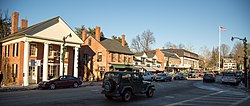
Concord’s Main Street in 2012
|
|

Seal
|
|
| Motto:
Quam Firma Res Concordia (Latin)
“How Strong Is Harmony” |
|

Location in Middlesex County, Massachusetts
|
|

 Concord
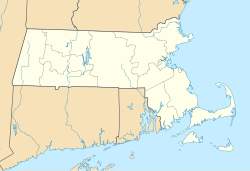
Concord
Concord
|
|
| Coordinates: 42°27′37″N 71°20′58″W / 42.46028°N 71.34944°W | |
| Country | United States |
| State | Massachusetts |
| County | Middlesex |
| Settled | 1635 |
| Incorporated | September 12, 1635 |
| Founded by | Peter Bulkley and Simon Willard |
| Government | |
| • Type | Open town meeting |
| • Town Manager |
Kerry Lafleur |
| Area | |
|
• Total
|
26.0 sq mi (67.4 km) |
| • Land | 24.9 sq mi (64.5 km) |
| • Water | 0.97 sq mi (2.5 km) |
| Elevation | 141 ft (43 m) |
| Population
(2020)
|
|
|
• Total
|
18,491 |
| • Density | 743/sq mi (287/km) |
| Time zone | UTC−5 (Eastern) |
| • Summer (DST) | UTC−4 (Eastern) |
| ZIP Code |
01742
|
| Area code | 351 / 978 |
| FIPS code | 25-15060 |
| GNIS feature ID | 0619398 |
| Website | www.concordma.gov |
Concord is a town in Middlesex County, Massachusetts, United States. In the 2020 census, the town population was 18,491. It contains the census-designated place of West Concord. The United States Census Bureau considers Concord part of Greater Boston. The town center is near where the Sudbury and Assabet rivers join to form the Concord River.
The town was established in 1635 by a group of English settlers; by 1775, the population had grown to 1,400.
As dissension between colonists in North America and the British crown intensified, 700 troops were sent to confiscate militia ordnance stored at Concord on April 19, 1775. The ensuing conflict, the battles of Lexington and Concord, were the incidents (including the shot heard round the world) which triggered the American Revolutionary War.
A rich literary community developed in Concord during the mid-19th century, centered around Ralph Waldo Emerson. Emerson’s circle included Nathaniel Hawthorne, Louisa May Alcott and Henry David Thoreau. Major works written in Concord during this period include Alcott’s novel Little Women, Emerson’s essay Self-Reliance, and Thoreau’s Walden and Civil Disobedience. In this era, the now-ubiquitous Concord grape was developed in Concord by Ephraim Wales Bull. Until 2025, major grape juice producer Welch’s was headquartered there.
In the 20th century, Concord developed into an affluent Boston suburb and tourist destination, drawing visitors to the Old North Bridge, Orchard House and Walden Pond. The town retains its literary culture and is home to notable authors, including Doris Kearns Goodwin, Alan Lightman and Gregory Maguire. Concord is also notable for its progressive and environmentalist politics, becoming in 2012 the first community in the United States to ban single-serving PET bottles.
ABOUT Concord, MA
The area which became the town of Concord was originally known as “Musketaquid”, situated at the confluence of the Sudbury and Assabet rivers. The name was an Algonquian word for “grassy plain”, fitting the area’s low-lying marshes and kettle holes. Native Americans had cultivated corn crops there; the rivers were rich with fish and the land was lush and arable. The area was largely depopulated in 1633 by an epidemic of smallpox, a disease likely to have been introduced to the New World by European explorers and settlers.
In 1635, a group of English settlers led by Rev. Peter Bulkley and Major Simon Willard received a land grant from the General Court and negotiated a land purchase with the local indigenous tribes. Bulkeley was an influential religious leader who “carried a good number of planters with him into the woods”; Willard was a canny trader who spoke the Algonquian language and had gained the trust of Native Americans. They exchanged wampum, hatchets, knives, cloth and other useful items for the six-square-mile (16 km) purchase from Squaw Sachem of Mistick, which formed the basis of the new town, called “Concord” in appreciation of the peaceful acquisition.
The battles of Lexington and Concord were the first military engagements of the American Revolutionary War. On April 19, 1775, 700 British Army troops led by Lieutenant-Colonel Francis Smith marched from Boston to Concord to confiscate a cache of arms stored in the town. Unbeknownst to them, Patriot leaders had moved most of the cache elsewhere. Around 150 Patriot minutemen from local towns, who had been forewarned of the Army’s march by Samuel Prescott on April 18, quickly mustered and confronted the British in Lexington. Though who fired the first shot is unknown, a firefight broke out and the British fired a volley at the Americans before dispersing them with a bayonet charge, killing eight. The British proceeded into Concord and dispersed into company-sized formations to search for the cache. At 11:00am, 400 minutemen engaged 100 British troops at the Old North Bridge, leading to a number of casualties on both sides and forcing them to fall back and rejoin the Army’s main force.
After the British completed their search for the cache in Concord, they marched back to Boston, but were constantly attacked by minutemen in hit-and-run attacks, suffering more casualties before reaching Charlestown. The minutemen then blockaded the narrow land accesses to Charlestown, initiating the siege of Boston. Poet Ralph Waldo Emerson subsequently described the shot fired by the minutemen at the Old North Bridge in his 1837 poem “Concord Hymn” as the “shot heard round the world”. In 1894, the Lexington Historical Society petitioned the Massachusetts State Legislature to proclaim April 19 “Lexington Day”; Concord countered with “Concord Day”. Governor Frederic T. Greenhalge opted for a compromise, proclaiming the day as Patriots’ Day. In April 1975, Concord hosted a bicentennial celebration of the battle, featuring an address at the Old North Bridge by President Gerald Ford.
Concord has a remarkably rich literary history centered in the 19th century around Ralph Waldo Emerson (1803–1882), who moved there in 1835 and quickly became its most prominent citizen. A successful lecturer and philosopher, Emerson had deep roots in the town: his father, Rev. William Emerson (1769–1811), grew up in Concord before becoming an eminent Boston minister, and his grandfather, William Emerson Sr., witnessed the battle at the North Bridge from his house, and later became a chaplain in the Continental Army. Emerson was at the center of a group of like-minded Transcendentalists living in Concord. Among them were the author Nathaniel Hawthorne (1804–1864) and the philosopher Amos Bronson Alcott (1799–1888), the father of Louisa May Alcott (1832–1888). A native Concordian, Henry David Thoreau (1817–1862) was another notable member of Emerson’s circle. This substantial collection of literary talent in one small town led Henry James to dub Concord “the biggest little place in America.”
Among the products of this intellectually stimulating environment were Emerson’s many essays, including Self-Reliance (1841), Louisa May Alcott’s novel Little Women (1868), and Hawthorne’s story collection Mosses from an Old Manse (1846). Thoreau famously lived in a small cabin near Walden Pond, where he wrote Walden (1854). After being imprisoned in the Concord jail for refusing to pay taxes in political protest against slavery and the Mexican–American War, Thoreau penned the influential essay “Resistance to Civil Government”, popularly known as Civil Disobedience (1849). Evidencing their strong political beliefs through actions, Thoreau and many of his neighbors served as station masters and agents on the Underground Railroad.
The Wayside, a house on Lexington Road, has been home to several authors. It was occupied by scientist John Winthrop (1714–1779) when Harvard College was temporarily moved to Concord during the Revolutionary War. The Wayside was later the home of the Alcott family (who referred to it as “Hillside”); the Alcotts sold it to Hawthorne in 1852, and the family moved into the adjacent Orchard House in 1858. Hawthorne dubbed the house “The Wayside” and lived there until his death. The house was purchased in 1883 by Boston publisher Daniel Lothrop and his wife, Harriett, who wrote the Five Little Peppers series and other children’s books under the pen name Margaret Sidney. Today, The Wayside and the Orchard House are both museums. Emerson, Thoreau, Hawthorne and the Alcotts are buried on Authors’ Ridge in Concord’s Sleepy Hollow Cemetery.
The 20th-century composer Charles Ives wrote his Concord Sonata (c. 1904–1915) as a series of impressionistic portraits of literary figures associated with the town. Concord maintains a lively literary culture to this day; notable authors who have called the town home in recent years include Doris Kearns Goodwin, Alan Lightman, Robert B. Parker and Gregory Maguire.
In 1849, Ephraim Wales Bull developed the now-ubiquitous Concord grape at his home on Lexington Road, where the original vine still grows. Welch’s, the first company to sell grape juice, maintains a headquarters in Concord. The Boston-born Bull developed the Concord grape by experimenting with seeds from some of the native species. On his farm outside Concord, down the road from the Emerson, Thoreau, Hawthorne and Alcott homesteads, he planted some 22,000 seedlings before producing the ideal grape. Early ripening, to escape the killing northern frosts, but with a rich, full-bodied flavor, the hardy Concord grape thrives where European cuttings had failed to survive. In 1853, Bull felt ready to put the first bunches of Concord grapes before the public and won a prize at the Boston Horticultural Society Exhibition. From these early arbors, the fame of Bull’s Concord grape spread worldwide, bringing him up to $1,000 a cutting, but he died a relatively poor man. The inscription on his tombstone reads, “He sowed—others reaped.”
On September 5, 2012, Concord became the first community in the United States to approve a ban on the sale of water in single-serving plastic bottles. The law banned the sale of PET bottles of one liter (34 U.S. fl oz) or less starting January 1, 2013. The ban provoked national controversy. An editorial in the Los Angeles Times characterized the ban as “born of convoluted reasoning” and “wrongheaded.” Some residents believed the ban would do little to affect the sales of bottled water, which was still highly accessible in the surrounding areas, and that it restricted consumers’ freedom of choice. Opponents also considered the ban to unfairly target one product in particular, when other, less healthy alternatives such as soda and fruit juice were still readily available in bottled form. Nonetheless, subsequent efforts to repeal the ban have failed in open town meetings. An effort to repeal Concord’s ban on the sale of plastic water bottles was resoundingly defeated at a Town Meeting. Resident Jean Hill, who led the initial fight for the ban, said, “I really feel at the age of 86 that I’ve really accomplished something.” Town Moderator Eric Van Loon didn’t even bother taking an official tally because opposition to repeal was so overwhelming. It appeared that upwards of 80 to 90 percent of the 1,127 voters in attendance raised their ballots against the repeal measure.