Swimming Pool Company Ipswich MA
Gunite Swimming Pool Company Ipswich, MA:
Inground Pool Contractors & Spa Experts
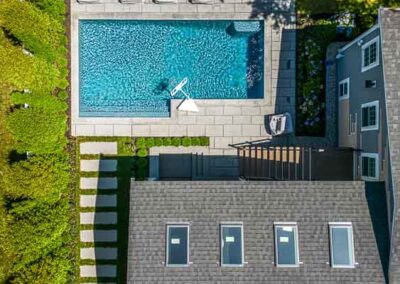
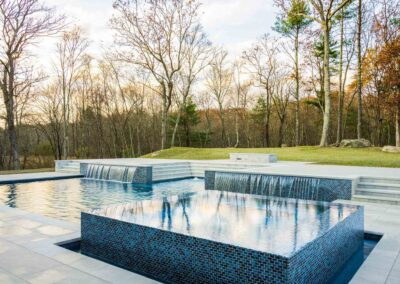
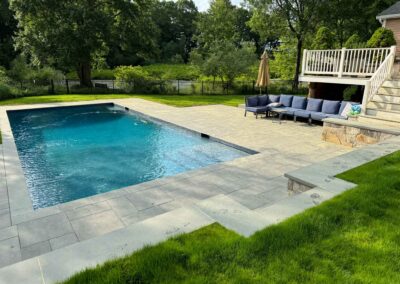
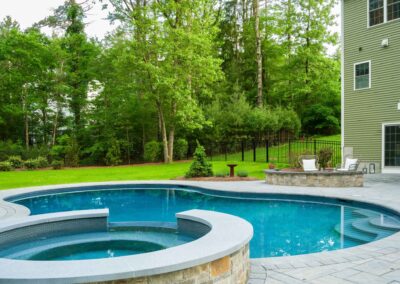
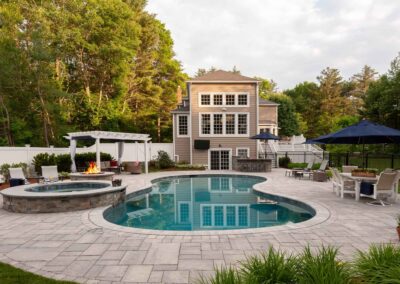
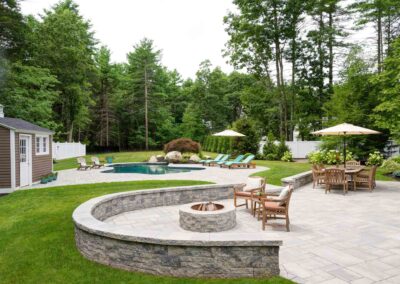
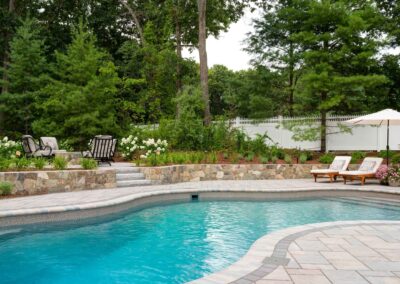
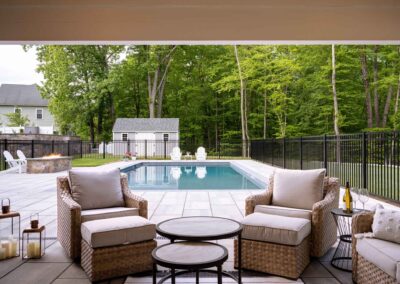
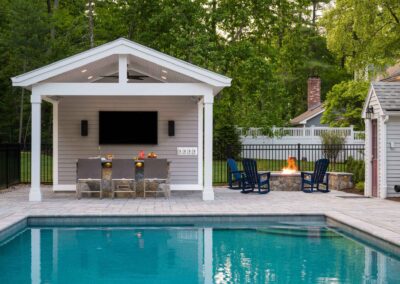
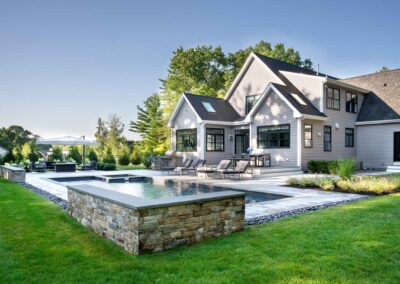
Welcome to the premier destination for all your swimming pool needs in Ipswich, MA. Whether you’re dreaming of a luxurious inground pool or a serene spa retreat, our team of expert pool builders is here to transform your backyard into a personal oasis. With a commitment to quality and customer satisfaction, our swimming pool company Ipswich take pride in providing exceptional
What to Look for in a Gunite Pool Contractor Ipswich, MA?
When choosing a gunite pool contractor in Ipswich, MA, it’s essential to look beyond just pricing. The right contractor will offer not only expert craftsmanship and premium materials but also a streamlined, start-to-finish experience—from custom design to flawless installation and ongoing maintenance. Look for a team that listens to your vision, respects your property, and delivers results that elevate your outdoor space. Experience, transparency, and a portfolio of stunning, completed projects are the hallmarks of a contractor you can trust with your investment.
How to Choose the Right Swimming Pool Company?
Choosing the right swimming pool contractor is crucial for ensuring a seamless pool construction experience. Look for a Swimming Pool Company with a proven track record in inground swimming pool projects, and prioritize those that offer comprehensive services from design to installation. A good contractor will guide you through the pool design process, helping you select the best materials and features for your new pool. Ensure they have the necessary licenses and insurance to protect your investment.
What Makes a Good Inground Pool Contractor?
An exceptional inground pool contractor combines technical expertise with creative vision. They should be adept at working with various materials, including gunite and vinyl liners, and have experience with custom pool designs. The ability to integrate additional features like spas and hot tubs seamlessly into your pool setup is a hallmark of a skilled contractor. Their commitment to using high-quality pool supplies and chemicals ensures the longevity and safety of your swimming pool.
Why is Experience Important in Pool Construction?
Experience in pool construction is invaluable. Seasoned contractors understand the nuances of pool installation and can anticipate potential challenges, ensuring a smooth and efficient build process. Their expertise in inground gunite and vinyl pool construction allows them to deliver a durable and aesthetically pleasing result. Experienced contractors also offer valuable insights into maintenance practices, helping pool owners enjoy their investment for years to come.
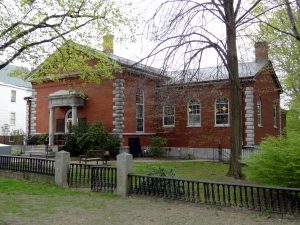
Luxury Pools By MF, a top-rated gunite pool builder specializes in:
-
-
- Custom Gunite Pool Design
- Custom Landscape Design
- Gunite Pool Installation
- Gunite Pool Renovation
- Pool Openings and Closings
- 3D Design Renderings
- Custom Spas
- Outdoor Kitchen / BBQ Installation
- Water Feature Design
- Unique Fire Pits
- Sunken Living Rooms
- Pool Houses and Outdoor Structures
- Amongst many other high-end services
-
The team has helped many Ipswich homeowners, business owners, builders, property managers, and other individuals in the Greater Boston, MA area. After some research, we’re confident you’ll find us to be the right Gunite Pool Builder to handle your outdoor project.
What Makes Us Different?
SUPERIOR CONSTRUCTION
Gunite swimming pools are built to last the tests of time..
Quality Craftsmanship
30+ years of gunite pool installation experience
Expert Project Managers
One-stop shop for all your gunite pool needs and services.
White-Glove Service
Top quality service to take care of all your pool needs.
How Does Gunite Pool Installation Work?
Gunite pool installation in Ipswich, MA is a multi-phase process that blends precision engineering with custom design. It begins with an in-depth consultation and site evaluation, followed by excavation and the creation of a steel-rebar framework that defines the shape of your pool. Once the structure is in place, gunite—a mixture of cement and sand—is sprayed at high velocity to form a solid, durable shell. After curing, your pool is finished with tiles, coping, and plaster, then filled and fine-tuned with the right equipment and water features. A reputable contractor will guide you through each step, ensuring your pool is built to last and tailored to your lifestyle.
What are the Steps in Inground Pool Installation?
The pool installation process begins with a thorough site assessment and design consultation. Once the design is finalized, excavation and groundwork prepare the space for the pool structure. Gunite or vinyl liner installation follows, creating the pool’s form. Finally, plumbing, electrical work, and finishing touches like decking and landscaping complete the project. Each step is meticulously planned to ensure quality and precision.
How Long Does It Take to Install a Swimming Pool?
The timeline for installing a swimming pool varies based on design complexity and site conditions. Generally, a standard inground pool project can take several weeks to a few months from start to finish. Factors such as weather, permitting, and customization options can influence the schedule. A reliable pool construction company will provide a detailed timeline and keep you informed throughout the process.
What Materials are Used in Gunite Pool Construction?
Gunite pools are renowned for their durability and versatility. The construction involves spraying a concrete mixture onto a reinforced steel framework, creating a robust and customizable structure. This method allows for flexible pool shapes and sizes, accommodating any backyard landscape. The use of high-quality materials ensures a long-lasting pool that can withstand the elements and provide endless enjoyment.
Talk to an Expert
We understand that sometimes you just want to talk before scheduling a consultation. Our team will gladly answer any of your questions or help you with any of your concerns.
Call Mike or Kristine today!
(508) 504-7665
Why Opt for a Gunite Pool in Your Ipswich Backyard?
Choosing a gunite pool for your backyard in Ipswich, MA means investing in durability, design flexibility, and timeless beauty. Unlike fiberglass or vinyl options, gunite pools are built to last for decades and can be fully customized to match your outdoor vision—whether you’re dreaming of a sleek modern retreat or a resort-style oasis. With endless options for shape, depth, and finishes, gunite allows for features like spas, waterfalls, tanning ledges, and intricate tile work. It’s the gold standard for homeowners who want more than just a pool—they want a showpiece.
What are the Benefits of Adding a Spa?
Adding a spa to your gunite pool enhances relaxation and wellness benefits. A spa provides a therapeutic experience, offering hydrotherapy features that alleviate stress and promote well-being. The integration of a spa with your pool creates a versatile space for entertainment and leisure, transforming your backyard into a luxurious retreat. The combination of a pool and spa increases property value and appeal.
CTA: Enhance Your Pool with a Spa
How to Integrate a Spa with Your Inground Pool?
Integrating a spa with your inground pool involves strategic design and expert installation. The spa can be seamlessly connected to the pool, allowing for shared heating and filtration systems. This integration not only optimizes space but also creates a cohesive aesthetic. A custom pool builder will work with you to design a layout that complements your landscape while meeting your functional needs.
CTA: Design Your Pool and Spa Combo
What Options are Available For My New Gunite Pool?
When it comes to designing your new gunite pool, the options are nearly limitless. From custom shapes and depths to premium finishes like quartz, pebble, or tile, gunite offers unmatched flexibility to bring your vision to life. You can add built-in spas, tanning ledges, beach entries, and dramatic water features like waterfalls or deck jets. Enhance your outdoor space further with integrated lighting, smart automation, and luxury additions like fire bowls, poolside kitchens, or swim-up bars. Whether you want a sleek modern look or a resort-style retreat, gunite pools are fully customizable to suit your style, space, and lifestyle.
How Often Should Pool Maintenance Be Done?
Regular pool maintenance is essential for preserving water quality and ensuring the longevity of your pool. Professional
CTA: Schedule Pool Maintenance Services
What to Expect from Professional Pool Service ?
Professional
CTA: Book Your Professional
How Does Luxury Pools By MF Design Custom Pools?
At Luxury Pools By MF, every custom pool begins with a personalized onsite visit or design consultation where we listen to your vision, assess your space, and explore the possibilities. From there, our design team creates a detailed plan tailored to your lifestyle, incorporating elements like pool shape, elevation, decking, landscaping, and optional features such as spas, water features, or integrated lighting. Once your design is finalized, our expert crew moves seamlessly into the gunite pool installation phase, using high-quality materials and precision craftsmanship to bring your dream pool to life. The result? A stunning, one-of-a-kind backyard retreat built for beauty, functionality, and lasting value.
What are the Latest Trends in Pool Design?
Luxury pools by MF Design embrace the latest trends in pool design, offering innovative features and materials that elevate your outdoor space. From infinity edges and natural stone finishes to energy-efficient systems and smart technology integration, our custom pools reflect modern aesthetics and functionality. Stay ahead of design trends with a pool that combines beauty and practicality, tailored to your lifestyle.
CTA: Discover Cutting-Edge Pool Designs
How to Incorporate a Custom Pool into Your Landscape?
Incorporating a custom pool into your landscape requires a harmonious blend of design elements and natural surroundings. Our team collaborates with you to create a pool that complements your home’s architecture and enhances your outdoor environment. Whether you desire a serene retreat or an entertainment hub, our custom designs ensure your pool is an integral part of your landscape, providing both visual appeal and functional enjoyment.
Ready to Begin?
Start your journey to a luxury pool or a redefined outdoor space by scheduling a free consultation with our team.




Ipswich MAP
Ipswich OVERVIEW
|
Ipswich, Massachusetts
|
|
|---|---|
|
Town
|
|
| Town of Ipswich | |

John Whipple House, constructed c. 1677
|
|

Seal
|
|
| Nickname:
Birthplace of American Independence
|
|

Location in Essex County and the state of Massachusetts.
|
|
| Coordinates:
42°40′45″N 70°50′30″W / 42.67917°N 70.84167°W |
|
| Country | United States |
| State | Massachusetts |
| County | Essex |
| Settled | 1633 |
| Incorporated | August 5, 1634 |
| Founded by | John Winthrop the Younger |
| Named after | Ipswich, England |
| Government | |
| • Type | Open town meeting |
| Area | |
|
• Total
|
42.5 sq mi (110.1 km) |
| • Land | 32.1 sq mi (83.2 km) |
| • Water | 10.4 sq mi (26.9 km) |
| Elevation | 50 ft (15 m) |
| Population
(2020)
|
|
|
• Total
|
13,785 |
| • Density | 320/sq mi (130/km) |
| Time zone | UTC−5 (Eastern) |
| • Summer (DST) | UTC−4 (Eastern) |
| ZIP Code |
01938
|
| Area code | 351/356/978 |
| FIPS code | 25-32310 |
| GNIS feature ID | 0619448 |
| Website | ipswichma.gov |
Ipswich is a coastal town in Essex County, Massachusetts, United States. The population was 13,785 at the 2020 census. Home to Willowdale State Forest and Sandy Point State Reservation, Ipswich includes the southern part of Plum Island. A residential community with a vibrant tourism industry, the town is famous for its clams, celebrated annually at the Ipswich Chowderfest, and for Crane Beach, a barrier beach near the Crane estate. Ipswich was incorporated as a town in 1634.
ABOUT Ipswich, MA
 |
This section needs additional citations for verification. (March 2023)
|
Ipswich was founded by John Winthrop the Younger, son of John Winthrop, one of the founders of the Massachusetts Bay Colony in 1630 and its first governor, elected in England in 1629. Several hundred colonists sailed from England in 1630 in a fleet of 11 ships, including Winthrop’s flagship, the Arbella. Investigating the region of Salem and Cape Ann, they entertained aboard the Arbella for a day, June 12, 1630, a native chief of the lands to the north, Chief Masconomet. The event was recorded in Winthrop’s journal on the 13th, but Winthrop did not say how they overcame the language barrier. The name they heard from Masconomet concerning the country over which he ruled has been reconstructed as Wonnesquamsauke, which the English rendered as “Agawam”. The colonists, however, sailed to the south where some buildings had already been prepared for them at a place newly named Charlestown.
That winter they lost a few hundred colonists to malnutrition and disease. They also experienced their first nor’easter, which cost them some fingers and toes, as well as houses destroyed by the fires they kept burning day and night. Just as Winthrop was handing out the last handful of grain, the supply ship Lyon entered Boston Harbor. John sent for his family in England, but his then wife, Margaret, her children, and his eldest son, John, whose mother was the elder John’s first wife, Mary Forth, did not arrive until November, on the Lyon.
John the Younger resided with his father and stepmother until 1633, when he resolved to settle in Agawam, with the permission of the General Court of Massachusetts. Captain John Smith had written about the Angoam or Aggawom region in 1614, calling it “an excellent habitation, being a good and safe harbour.”
John the Younger and 12 men aboard a shallop sailed into Ipswich harbor and took up residence there. The first settlers with Winthrop were William Clerk, Robert Coles, Thomas Howlet, John Biggs, John Gage, Thomas Hardy, William Perkins, John Thorndike, William Sargent, and three others whose names are uncertain. Two men continued up the river (now River Road) to a large meadow, which they called New Meadows, now Topsfield. Agawam was incorporated on August 5, 1634, as Ipswich, after Ipswich in the county of Suffolk, England. The name “Ipswich” was taken “in acknowledgment of the great honor and kindness done to our people which took shipping there.” Nathaniel Ward, an assistant pastor in town from 1634 to 1636, wrote the first code of laws for Massachusetts and later published the religious/political work The Simple Cobbler of Aggawam in America in England.
In 1638, Masconomet entered into a contract with John Winthrop the Younger for the purchase of Ipswich for “wampampeage, & other things: and … also for the sume of twenty pounds.” There is no record of any Native resistance to the colonization either at Charlestown or at Agawam, though there is documentation of devastating virgin soil epidemics among indigenous people in the area around 1617 and again in 1633, and contemporary reports attest to ghost towns encountered by early English settlers.
Pioneers became farmers, fishermen, shipbuilders or traders. The tidal Ipswich River provided water power for mills, and salt marshes supplied hay for livestock. But in 1687, Ipswich residents, led by the Reverend John Wise, protested a tax imposed by the governor, Sir Edmund Andros. As Englishmen, they argued, taxation without representation was unacceptable. Citizens were jailed, but then Andros was recalled to England in 1689, and the new British sovereigns, William III and Mary II, issued colonists another charter. The rebellion is the reason the town calls itself the “Birthplace of American Independence”.
A cottage industry in lace-making developed. Ipswich Lace is a unique style, and the only known hand-made bobbin lace produced commercially in the U.S.
Great clipper ships of the 19th century bypassed Ipswich in favor of the deep-water seaports at Salem, Newburyport, Quincy, and Boston. The town remained primarily a fishing and farming community, its residents living in older homes they could not afford to replace—leaving Ipswich with a considerable inventory of early architecture. In 1822, a stocking manufacturing machine that had been smuggled out of England arrived at Ipswich, violating a British ban on exporting such technology, and the community developed as a mill town. In 1828, the Ipswich Female Seminary was founded. In 1868, Amos A. Lawrence established the Ipswich Hosiery Mills beside the river. It became the nation’s largest stocking mill by the turn of the 20th century. In 1913, the mill experienced a labor strike led by the Industrial Workers of the World. What may be the last witchcraft trial in North America was held in Ipswich in 1878. In the Ipswich witchcraft trial, a member of the Christian Science religion was accused of using his mental powers to harm others, including a spinster living in the town.
In 1910, Richard T. Crane Jr. of Chicago, the business magnate owner of Crane Plumbing, bought Castle Hill, a drumlin on Ipswich Bay. He hired Olmsted Brothers, successors to Frederick Law Olmsted, to landscape his 3,500-acre (14 km) estate, and engaged the Boston architectural firm of Shepley, Rutan & Coolidge to design an Italian Renaissance-Revival style villa on the summit. A grande allée, 160 feet (49 m) wide and lined with statuary, would run the half mile from house to sea. But his wife, Florence, loathed the building. Crane promised that if she still disliked it in 10 years, he would replace it. In 1928, a new 59-room mansion designed by Chicago architect David Adler in the English Stuart style stood in its place, called the Great House. At Mrs. Crane’s death in 1949, the entire property was bequeathed to The Trustees of Reservations, which uses it as a venue for concerts and weddings.