Swimming Pool Company Lawrence MA
Gunite Swimming Pool Company Lawrence, MA:
Inground Pool Contractors & Spa Experts
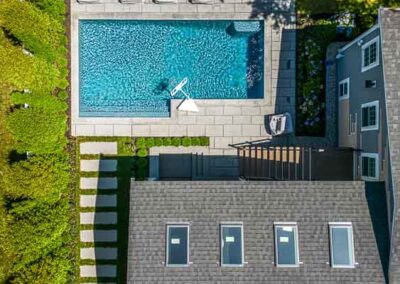
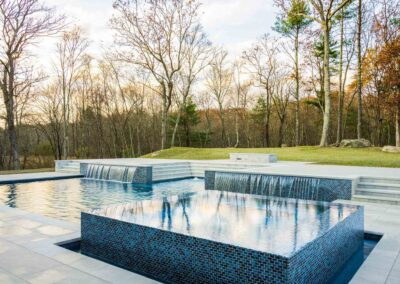
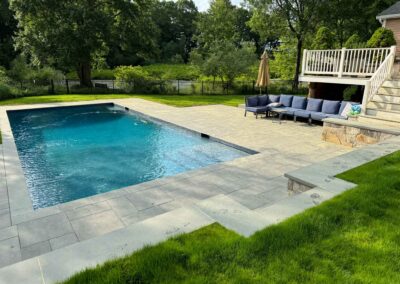
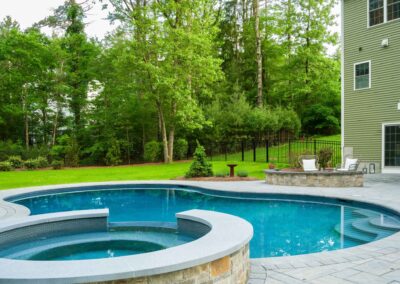
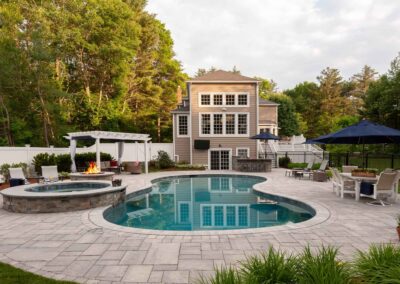
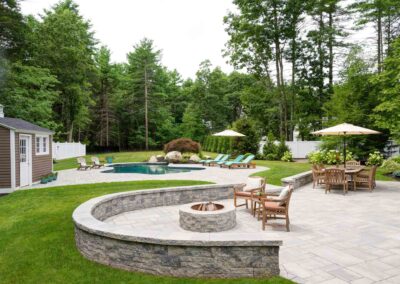
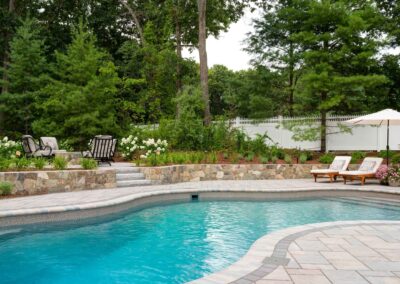
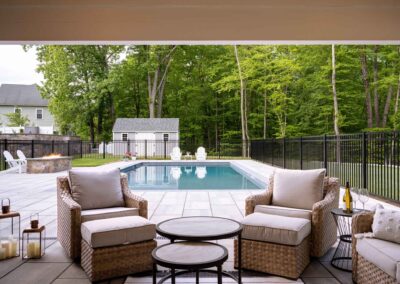
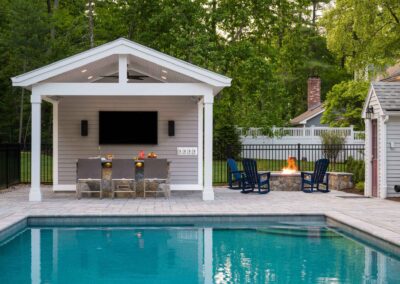
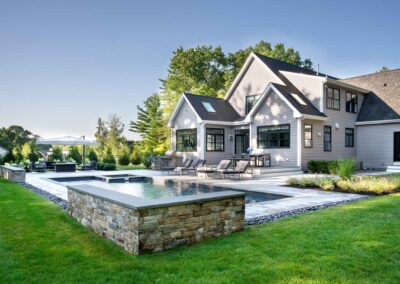
Welcome to the premier destination for all your swimming pool needs in Lawrence, MA. Whether you’re dreaming of a luxurious inground pool or a serene spa retreat, our team of expert pool builders is here to transform your backyard into a personal oasis. With a commitment to quality and customer satisfaction, our swimming pool company Lawrence take pride in providing exceptional
What to Look for in a Gunite Pool Contractor Lawrence, MA?
When choosing a gunite pool contractor in Lawrence, MA, it’s essential to look beyond just pricing. The right contractor will offer not only expert craftsmanship and premium materials but also a streamlined, start-to-finish experience—from custom design to flawless installation and ongoing maintenance. Look for a team that listens to your vision, respects your property, and delivers results that elevate your outdoor space. Experience, transparency, and a portfolio of stunning, completed projects are the hallmarks of a contractor you can trust with your investment.
How to Choose the Right Swimming Pool Company?
Choosing the right swimming pool contractor is crucial for ensuring a seamless pool construction experience. Look for a Swimming Pool Company with a proven track record in inground swimming pool projects, and prioritize those that offer comprehensive services from design to installation. A good contractor will guide you through the pool design process, helping you select the best materials and features for your new pool. Ensure they have the necessary licenses and insurance to protect your investment.
What Makes a Good Inground Pool Contractor?
An exceptional inground pool contractor combines technical expertise with creative vision. They should be adept at working with various materials, including gunite and vinyl liners, and have experience with custom pool designs. The ability to integrate additional features like spas and hot tubs seamlessly into your pool setup is a hallmark of a skilled contractor. Their commitment to using high-quality pool supplies and chemicals ensures the longevity and safety of your swimming pool.
Why is Experience Important in Pool Construction?
Experience in pool construction is invaluable. Seasoned contractors understand the nuances of pool installation and can anticipate potential challenges, ensuring a smooth and efficient build process. Their expertise in inground gunite and vinyl pool construction allows them to deliver a durable and aesthetically pleasing result. Experienced contractors also offer valuable insights into maintenance practices, helping pool owners enjoy their investment for years to come.
Luxury Pools By MF, a top-rated gunite pool builder specializes in:
-
-
- Custom Gunite Pool Design
- Custom Landscape Design
- Gunite Pool Installation
- Gunite Pool Renovation
- Pool Openings and Closings
- 3D Design Renderings
- Custom Spas
- Outdoor Kitchen / BBQ Installation
- Water Feature Design
- Unique Fire Pits
- Sunken Living Rooms
- Pool Houses and Outdoor Structures
- Amongst many other high-end services
-
The team has helped many Lawrence homeowners, business owners, builders, property managers, and other individuals in the Greater Boston, MA area. After some research, we’re confident you’ll find us to be the right Gunite Pool Builder to handle your outdoor project.
What Makes Us Different?
SUPERIOR CONSTRUCTION
Gunite swimming pools are built to last the tests of time..
Quality Craftsmanship
30+ years of gunite pool installation experience
Expert Project Managers
One-stop shop for all your gunite pool needs and services.
White-Glove Service
Top quality service to take care of all your pool needs.
How Does Gunite Pool Installation Work?
Gunite pool installation in Lawrence, MA is a multi-phase process that blends precision engineering with custom design. It begins with an in-depth consultation and site evaluation, followed by excavation and the creation of a steel-rebar framework that defines the shape of your pool. Once the structure is in place, gunite—a mixture of cement and sand—is sprayed at high velocity to form a solid, durable shell. After curing, your pool is finished with tiles, coping, and plaster, then filled and fine-tuned with the right equipment and water features. A reputable contractor will guide you through each step, ensuring your pool is built to last and tailored to your lifestyle.
What are the Steps in Inground Pool Installation?
The pool installation process begins with a thorough site assessment and design consultation. Once the design is finalized, excavation and groundwork prepare the space for the pool structure. Gunite or vinyl liner installation follows, creating the pool’s form. Finally, plumbing, electrical work, and finishing touches like decking and landscaping complete the project. Each step is meticulously planned to ensure quality and precision.
How Long Does It Take to Install a Swimming Pool?
The timeline for installing a swimming pool varies based on design complexity and site conditions. Generally, a standard inground pool project can take several weeks to a few months from start to finish. Factors such as weather, permitting, and customization options can influence the schedule. A reliable pool construction company will provide a detailed timeline and keep you informed throughout the process.
What Materials are Used in Gunite Pool Construction?
Gunite pools are renowned for their durability and versatility. The construction involves spraying a concrete mixture onto a reinforced steel framework, creating a robust and customizable structure. This method allows for flexible pool shapes and sizes, accommodating any backyard landscape. The use of high-quality materials ensures a long-lasting pool that can withstand the elements and provide endless enjoyment.
Talk to an Expert
We understand that sometimes you just want to talk before scheduling a consultation. Our team will gladly answer any of your questions or help you with any of your concerns.
Call Mike or Kristine today!
(508) 504-7665
Why Opt for a Gunite Pool in Your Lawrence Backyard?
Choosing a gunite pool for your backyard in Lawrence, MA means investing in durability, design flexibility, and timeless beauty. Unlike fiberglass or vinyl options, gunite pools are built to last for decades and can be fully customized to match your outdoor vision—whether you’re dreaming of a sleek modern retreat or a resort-style oasis. With endless options for shape, depth, and finishes, gunite allows for features like spas, waterfalls, tanning ledges, and intricate tile work. It’s the gold standard for homeowners who want more than just a pool—they want a showpiece.
What are the Benefits of Adding a Spa?
Adding a spa to your gunite pool enhances relaxation and wellness benefits. A spa provides a therapeutic experience, offering hydrotherapy features that alleviate stress and promote well-being. The integration of a spa with your pool creates a versatile space for entertainment and leisure, transforming your backyard into a luxurious retreat. The combination of a pool and spa increases property value and appeal.
CTA: Enhance Your Pool with a Spa
How to Integrate a Spa with Your Inground Pool?
Integrating a spa with your inground pool involves strategic design and expert installation. The spa can be seamlessly connected to the pool, allowing for shared heating and filtration systems. This integration not only optimizes space but also creates a cohesive aesthetic. A custom pool builder will work with you to design a layout that complements your landscape while meeting your functional needs.
CTA: Design Your Pool and Spa Combo
What Options are Available For My New Gunite Pool?
When it comes to designing your new gunite pool, the options are nearly limitless. From custom shapes and depths to premium finishes like quartz, pebble, or tile, gunite offers unmatched flexibility to bring your vision to life. You can add built-in spas, tanning ledges, beach entries, and dramatic water features like waterfalls or deck jets. Enhance your outdoor space further with integrated lighting, smart automation, and luxury additions like fire bowls, poolside kitchens, or swim-up bars. Whether you want a sleek modern look or a resort-style retreat, gunite pools are fully customizable to suit your style, space, and lifestyle.
How Often Should Pool Maintenance Be Done?
Regular pool maintenance is essential for preserving water quality and ensuring the longevity of your pool. Professional
CTA: Schedule Pool Maintenance Services
What to Expect from Professional Pool Service ?
Professional
CTA: Book Your Professional
How Does Luxury Pools By MF Design Custom Pools?
At Luxury Pools By MF, every custom pool begins with a personalized onsite visit or design consultation where we listen to your vision, assess your space, and explore the possibilities. From there, our design team creates a detailed plan tailored to your lifestyle, incorporating elements like pool shape, elevation, decking, landscaping, and optional features such as spas, water features, or integrated lighting. Once your design is finalized, our expert crew moves seamlessly into the gunite pool installation phase, using high-quality materials and precision craftsmanship to bring your dream pool to life. The result? A stunning, one-of-a-kind backyard retreat built for beauty, functionality, and lasting value.
What are the Latest Trends in Pool Design?
Luxury pools by MF Design embrace the latest trends in pool design, offering innovative features and materials that elevate your outdoor space. From infinity edges and natural stone finishes to energy-efficient systems and smart technology integration, our custom pools reflect modern aesthetics and functionality. Stay ahead of design trends with a pool that combines beauty and practicality, tailored to your lifestyle.
CTA: Discover Cutting-Edge Pool Designs
How to Incorporate a Custom Pool into Your Landscape?
Incorporating a custom pool into your landscape requires a harmonious blend of design elements and natural surroundings. Our team collaborates with you to create a pool that complements your home’s architecture and enhances your outdoor environment. Whether you desire a serene retreat or an entertainment hub, our custom designs ensure your pool is an integral part of your landscape, providing both visual appeal and functional enjoyment.
Ready to Begin?
Start your journey to a luxury pool or a redefined outdoor space by scheduling a free consultation with our team.




Lawrence MAP
Lawrence OVERVIEW
|
Lawrence, Massachusetts
|
|
|---|---|
|
City
|
|

North Canal
|
|

Flag

Seal
|
|
| Motto(s):
Industria (Latin)
“Industry” |
|

Location in Essex County, Massachusetts.
|
|
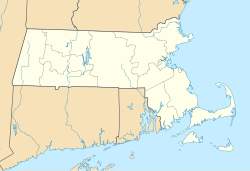
 Lawrence
Location in the United States
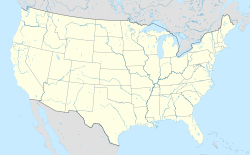
Lawrence
Lawrence (the United States)
|
|
| Coordinates: 42°42′25″N 71°09′49″W / 42.70694°N 71.16361°W | |
| Country | United States |
| State | Massachusetts |
| County | Essex |
| Region | New England |
| Settled | 1655 |
| Incorporated | 1847 |
| Incorporated (city) | 1853 |
| Founded by | Essex Company |
| Named after | Abbott Lawrence |
| Government | |
| • Type | Mayor–council |
| • Mayor | Brian De Peña |
| • City council | Jeovanny A. Rodrigueze (Council President) Stephany Infante (Vice-President, District E) Celina Reyes (at-large) Ana Levy (at-large) Fidelina Santiago (District A) Wendy Luzon (District B) Gregory Del Rosario (District C) Vivian Marmol (District D) Marc LaPlant (District F) |
| Area | |
|
• Total
|
7.43 sq mi (19.24 km) |
| • Land | 6.93 sq mi (17.95 km) |
| • Water | 0.50 sq mi (1.29 km) |
| Elevation | 16 ft (5 m) |
| Population
(2020)
|
|
|
• Total
|
89,143 |
| • Density | 12,863.35/sq mi (4,966.73/km) |
| Time zone | UTC−5 (Eastern) |
| • Summer (DST) | UTC−4 (EDST) |
| ZIP Codes |
01840–01843
|
| Area code | 351/978 |
| FIPS code | 25-34550 |
| Website | www |
Lawrence is a city located in Essex County, Massachusetts, United States, on the Merrimack River. At the 2020 census, the city had a population of 89,143. Surrounding communities include Methuen to the north, Andover to the southwest, and North Andover to the east. Lawrence and Salem were the county seats of Essex County, until the state abolished county government in 1999. Lawrence is part of the Merrimack Valley.
Manufacturing products of the city include electronic equipment, textiles, footwear, paper products, computers, and foodstuffs. Lawrence was the residence of the poet Robert Frost for his early school years; his essays and poems were first published in the Lawrence High School newspaper. Lawrence is also the birthplace of composer and conductor Leonard Bernstein in 1918, and singer Robert Goulet in 1933.
ABOUT Lawrence, MA
Native Americans lived along the Merrimack River for thousands of years before European colonization of the Americas. Evidence of farming at Den Rock Park and arrowhead manufacturing on the site where the Wood Mill now sits have been discovered.
At the time of contact in the early 1600s, the Pennacook or Pentucket had a presence north of the Merrimack, while Massachusett, Naumkeag, and Agawam controlled territory south of the river. The territory which would later be aggregated into the city of Lawrence was purchased from Pennacooks Sagahew and Passaquo in 1642 for the English settlement of Haverhill, and from Massachusett sachem Cutshamekin in 1646 as a post-hoc payment for the lands surrounding the English settlement of Andover (modern-day North Andover center).
Europeans first settled the Haverhill area in 1640, colonists from Newbury following the Merrimack River in from the coast. The area that would become Lawrence was then part of Methuen and Andover. The first settlement within present-day city limits came in 1655 with the establishment of a blockhouse in Shawsheen Fields, now South Lawrence.
The future site of the city (formerly parts of Andover and Methuen), was purchased by a consortium of local industrialists. The Water Power Association members: Abbott Lawrence, Edmund Bartlett, Thomas Hopkinson of Lowell, John Nesmith and Daniel Saunders, had purchased control of Peter’s Falls on the Merrimack River and hence controlled Bodwell’s Falls the site of the present Great Stone Dam. The group allotted fifty thousand dollars to buy land along the river to develop. In 1844, the group petitioned the legislature to act as a corporation, known as the Essex Company, which incorporated on April 16, 1845. The first excavations for the Great Stone Dam to harness the Merrimack River’s water power were done on August 1, 1845. The Essex Company would sell the water power to corporations such as the Arlington Mills, as well as organize the construction of mills and build to suit. Until 1847, when the state legislature recognized the community as a town, it was called interchangeably the “New City”, “Essex” or “Merrimac”. The post office, built in 1846, used the designation “Merrimac”. The city was incorporated in 1853, and named for Abbott Lawrence.
Canals were dug on both the north and the south banks to provide power to the factories that would soon be built on its banks as both mill owners and workers from across the city and the world flocked to the city in droves; many were Irish laborers who had experience with similar building work. The work was dangerous: injuries and even death were common.
The Pemberton Mill collapse occurred on January 10, 1860, in Lawrence, Massachusetts. The five-story textile mill, built in 1853, was a major employer, particularly for Irish immigrants, many of whom were women and children. At the time of the collapse, around 600–800 workers were inside, though exact numbers vary. The official death toll was 88, with estimates of 116–145 deaths and hundreds injured, many permanently disabled. The disaster was one of the deadliest industrial accidents in U.S. history. Investigations pinned the collapse on substandard construction, specifically defective cast-iron columns that were too weak to support the mill’s weight. Poor oversight, cost-cutting by owners, and overloading the structure with heavy machinery exacerbated the issue. The mill was known to vibrate heavily during operation, a warning sign ignored. As immigrants flooded into the United States in the mid to late 19th century, the population of Lawrence abounded with skilled and unskilled workers from several countries. Protesting conditions, in 1912 they walked out of the mills. The action, sometimes celebrated as the Bread and Roses Strike, was one of the more important, widely reported, labor struggles in American history.
The Industrial Workers of the World (the “One Big Union”, the “Wobblies”) defied the common wisdom that a largely female and ethnically divided workforce could not be organized, and the strike held through two bitterly cold winter months. The young 15-year mill hand Fred Beal, who was drawn by the experience into a lifetime of labor organizing, recalls that contrary to expectations, it was the most recent immigrant groups, “the Italians, Poles, Syrians [Lebanese] and Franco-Belgians”, who “kept it alive.
After hundreds of the strikers’ hungry children had been sent to sympathetic families in New York, New Jersey, and Vermont, and the U.S. Congress was induced to hold hearings, the mill owners decided to settle, giving workers in Lawrence and throughout New England raises of up to 20 percent. However, as a young Massachusetts Senator, John F. Kennedy was later to record, in the decades that followed the mill owners moved their capital and employment out of Lawrence and the region to the non-union South.
Lawrence was a great wool-processing center until that industry declined in the 1950s. The decline left Lawrence a struggling city. The population of Lawrence declined from over 80,000 residents in 1950 (and a high of 94,270 in 1920) to approximately 64,000 residents in 1980, the low point of Lawrence’s population. Much of the population relocated to nearby Methuen.
Like other northeastern cities suffering from the effects of post-World War II industrial decline, Lawrence has often made efforts at revitalization, some of them controversial. The Lawrence Redevelopment Authority and city officials utilized eminent domain for a perceived public benefit, via a top-down approach, to revitalize the city throughout the 1960s. Known first as urban redevelopment, and then urban renewal, Lawrence’s local government’s actions towards vulnerable immigrant and poor communities, contained an undercurrent of gentrification which lies beneath the goals to revitalize Lawrence. There was a clash of differing ideals and perceptions of blight, growth, and what constituted a desirable community. Ultimately the discussion left out those members of the community who would be directly impacted by urban redevelopment.