Swimming Pool Company Quincy MA
Gunite Swimming Pool Company Quincy, MA:
Inground Pool Contractors & Spa Experts
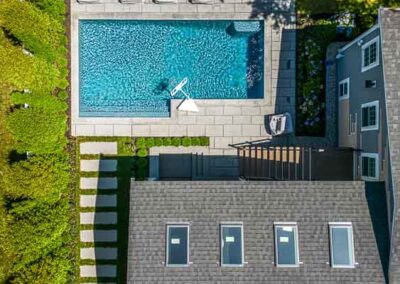
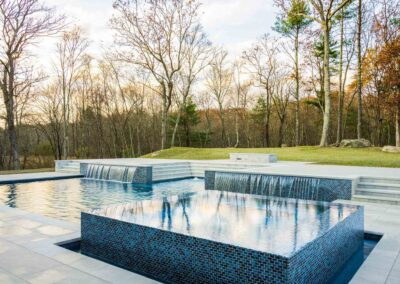
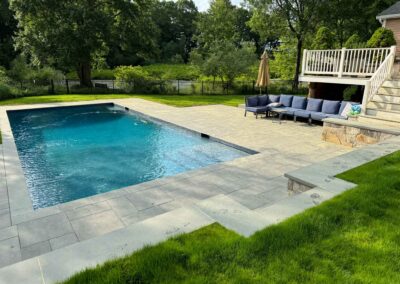
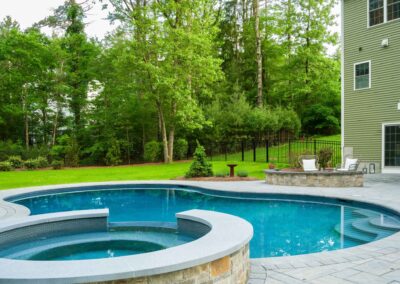
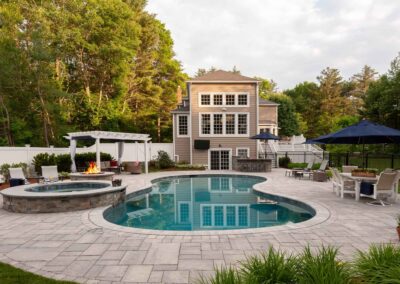
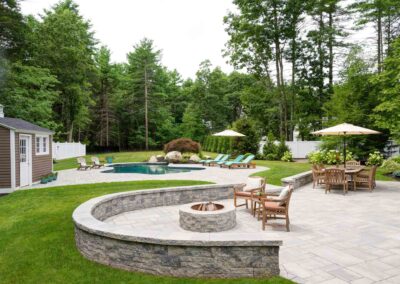
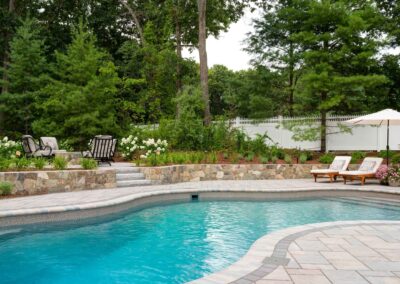
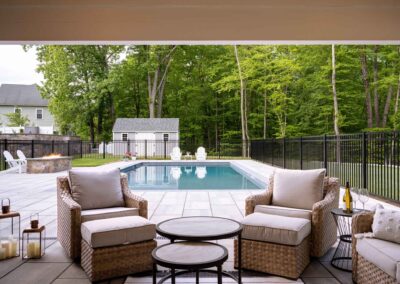
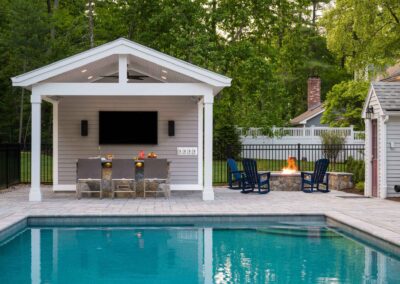
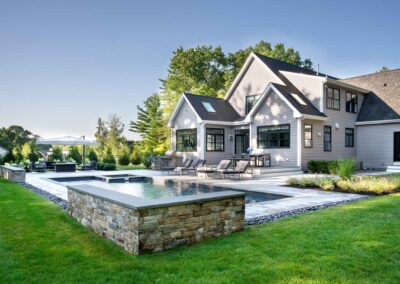
Welcome to the premier destination for all your swimming pool needs in Quincy, MA. Whether you’re dreaming of a luxurious inground pool or a serene spa retreat, our team of expert pool builders is here to transform your backyard into a personal oasis. With a commitment to quality and customer satisfaction, our swimming pool company Quincy take pride in providing exceptional
What to Look for in a Gunite Pool Contractor Quincy, MA?
When choosing a gunite pool contractor in Quincy, MA, it’s essential to look beyond just pricing. The right contractor will offer not only expert craftsmanship and premium materials but also a streamlined, start-to-finish experience—from custom design to flawless installation and ongoing maintenance. Look for a team that listens to your vision, respects your property, and delivers results that elevate your outdoor space. Experience, transparency, and a portfolio of stunning, completed projects are the hallmarks of a contractor you can trust with your investment.
How to Choose the Right Swimming Pool Company?
Choosing the right swimming pool contractor is crucial for ensuring a seamless pool construction experience. Look for a Swimming Pool Company with a proven track record in inground swimming pool projects, and prioritize those that offer comprehensive services from design to installation. A good contractor will guide you through the pool design process, helping you select the best materials and features for your new pool. Ensure they have the necessary licenses and insurance to protect your investment.
What Makes a Good Inground Pool Contractor?
An exceptional inground pool contractor combines technical expertise with creative vision. They should be adept at working with various materials, including gunite and vinyl liners, and have experience with custom pool designs. The ability to integrate additional features like spas and hot tubs seamlessly into your pool setup is a hallmark of a skilled contractor. Their commitment to using high-quality pool supplies and chemicals ensures the longevity and safety of your swimming pool.
Why is Experience Important in Pool Construction?
Experience in pool construction is invaluable. Seasoned contractors understand the nuances of pool installation and can anticipate potential challenges, ensuring a smooth and efficient build process. Their expertise in inground gunite and vinyl pool construction allows them to deliver a durable and aesthetically pleasing result. Experienced contractors also offer valuable insights into maintenance practices, helping pool owners enjoy their investment for years to come.

Luxury Pools By MF, a top-rated gunite pool builder specializes in:
-
-
- Custom Gunite Pool Design
- Custom Landscape Design
- Gunite Pool Installation
- Gunite Pool Renovation
- Pool Openings and Closings
- 3D Design Renderings
- Custom Spas
- Outdoor Kitchen / BBQ Installation
- Water Feature Design
- Unique Fire Pits
- Sunken Living Rooms
- Pool Houses and Outdoor Structures
- Amongst many other high-end services
-
The team has helped many Quincy homeowners, business owners, builders, property managers, and other individuals in the Greater Boston, MA area. After some research, we’re confident you’ll find us to be the right Gunite Pool Builder to handle your outdoor project.
What Makes Us Different?
SUPERIOR CONSTRUCTION
Gunite swimming pools are built to last the tests of time..
Quality Craftsmanship
30+ years of gunite pool installation experience
Expert Project Managers
One-stop shop for all your gunite pool needs and services.
White-Glove Service
Top quality service to take care of all your pool needs.
How Does Gunite Pool Installation Work?
Gunite pool installation in Quincy, MA is a multi-phase process that blends precision engineering with custom design. It begins with an in-depth consultation and site evaluation, followed by excavation and the creation of a steel-rebar framework that defines the shape of your pool. Once the structure is in place, gunite—a mixture of cement and sand—is sprayed at high velocity to form a solid, durable shell. After curing, your pool is finished with tiles, coping, and plaster, then filled and fine-tuned with the right equipment and water features. A reputable contractor will guide you through each step, ensuring your pool is built to last and tailored to your lifestyle.
What are the Steps in Inground Pool Installation?
The pool installation process begins with a thorough site assessment and design consultation. Once the design is finalized, excavation and groundwork prepare the space for the pool structure. Gunite or vinyl liner installation follows, creating the pool’s form. Finally, plumbing, electrical work, and finishing touches like decking and landscaping complete the project. Each step is meticulously planned to ensure quality and precision.
How Long Does It Take to Install a Swimming Pool?
The timeline for installing a swimming pool varies based on design complexity and site conditions. Generally, a standard inground pool project can take several weeks to a few months from start to finish. Factors such as weather, permitting, and customization options can influence the schedule. A reliable pool construction company will provide a detailed timeline and keep you informed throughout the process.
What Materials are Used in Gunite Pool Construction?
Gunite pools are renowned for their durability and versatility. The construction involves spraying a concrete mixture onto a reinforced steel framework, creating a robust and customizable structure. This method allows for flexible pool shapes and sizes, accommodating any backyard landscape. The use of high-quality materials ensures a long-lasting pool that can withstand the elements and provide endless enjoyment.
Talk to an Expert
We understand that sometimes you just want to talk before scheduling a consultation. Our team will gladly answer any of your questions or help you with any of your concerns.
Call Mike or Kristine today!
(508) 504-7665
Why Opt for a Gunite Pool in Your Quincy Backyard?
Choosing a gunite pool for your backyard in Quincy, MA means investing in durability, design flexibility, and timeless beauty. Unlike fiberglass or vinyl options, gunite pools are built to last for decades and can be fully customized to match your outdoor vision—whether you’re dreaming of a sleek modern retreat or a resort-style oasis. With endless options for shape, depth, and finishes, gunite allows for features like spas, waterfalls, tanning ledges, and intricate tile work. It’s the gold standard for homeowners who want more than just a pool—they want a showpiece.
What are the Benefits of Adding a Spa?
Adding a spa to your gunite pool enhances relaxation and wellness benefits. A spa provides a therapeutic experience, offering hydrotherapy features that alleviate stress and promote well-being. The integration of a spa with your pool creates a versatile space for entertainment and leisure, transforming your backyard into a luxurious retreat. The combination of a pool and spa increases property value and appeal.
CTA: Enhance Your Pool with a Spa
How to Integrate a Spa with Your Inground Pool?
Integrating a spa with your inground pool involves strategic design and expert installation. The spa can be seamlessly connected to the pool, allowing for shared heating and filtration systems. This integration not only optimizes space but also creates a cohesive aesthetic. A custom pool builder will work with you to design a layout that complements your landscape while meeting your functional needs.
CTA: Design Your Pool and Spa Combo
What Options are Available For My New Gunite Pool?
When it comes to designing your new gunite pool, the options are nearly limitless. From custom shapes and depths to premium finishes like quartz, pebble, or tile, gunite offers unmatched flexibility to bring your vision to life. You can add built-in spas, tanning ledges, beach entries, and dramatic water features like waterfalls or deck jets. Enhance your outdoor space further with integrated lighting, smart automation, and luxury additions like fire bowls, poolside kitchens, or swim-up bars. Whether you want a sleek modern look or a resort-style retreat, gunite pools are fully customizable to suit your style, space, and lifestyle.
How Often Should Pool Maintenance Be Done?
Regular pool maintenance is essential for preserving water quality and ensuring the longevity of your pool. Professional
CTA: Schedule Pool Maintenance Services
What to Expect from Professional Pool Service ?
Professional
CTA: Book Your Professional
How Does Luxury Pools By MF Design Custom Pools?
At Luxury Pools By MF, every custom pool begins with a personalized onsite visit or design consultation where we listen to your vision, assess your space, and explore the possibilities. From there, our design team creates a detailed plan tailored to your lifestyle, incorporating elements like pool shape, elevation, decking, landscaping, and optional features such as spas, water features, or integrated lighting. Once your design is finalized, our expert crew moves seamlessly into the gunite pool installation phase, using high-quality materials and precision craftsmanship to bring your dream pool to life. The result? A stunning, one-of-a-kind backyard retreat built for beauty, functionality, and lasting value.
What are the Latest Trends in Pool Design?
Luxury pools by MF Design embrace the latest trends in pool design, offering innovative features and materials that elevate your outdoor space. From infinity edges and natural stone finishes to energy-efficient systems and smart technology integration, our custom pools reflect modern aesthetics and functionality. Stay ahead of design trends with a pool that combines beauty and practicality, tailored to your lifestyle.
CTA: Discover Cutting-Edge Pool Designs
How to Incorporate a Custom Pool into Your Landscape?
Incorporating a custom pool into your landscape requires a harmonious blend of design elements and natural surroundings. Our team collaborates with you to create a pool that complements your home’s architecture and enhances your outdoor environment. Whether you desire a serene retreat or an entertainment hub, our custom designs ensure your pool is an integral part of your landscape, providing both visual appeal and functional enjoyment.
Ready to Begin?
Start your journey to a luxury pool or a redefined outdoor space by scheduling a free consultation with our team.




Quincy MAP
Quincy OVERVIEW
|
Quincy, Massachusetts
|
|
|---|---|
|
City
|
|
|
Quincy Center
Peacefield
Christ Church
Quincy Town Hall
USS Salem
Moswetuset Hummock
|
|

Flag

Seal
|
|
| Nickname:
“City of Presidents”
|
|
| Motto(s):
“Manet“ (Latin)
“It Remains” |
|

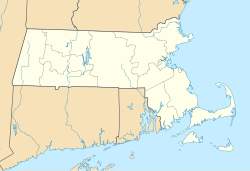
Location of Quincy in Norfolk County, Massachusetts
|
|

 Quincy
Quincy
Quincy
|
|
| Coordinates:
42°15′N 71°0′W / 42.250°N 71.000°W |
|
| Country |  United States United States |
| State |  Massachusetts Massachusetts |
| County | Norfolk |
| Region | New England |
| Settled | 1625 |
| Incorporated (town) | 1792 |
| Incorporated (city) | 1888 |
| Named after | John Quincy |
| Government | |
| • Type | Mayor–council |
| • Mayor | Thomas P. Koch (I) |
| • City Council |
|
| Area | |
|
• Total
|
26.91 sq mi (69.69 km) |
| • Land | 16.57 sq mi (42.92 km) |
| • Water | 10.33 sq mi (26.77 km) |
| Elevation | 30 ft (9 m) |
| Highest elevation | 517 ft (158 m) |
| Lowest elevation | 0 ft (0 m) |
| Population
(2020)
|
|
|
• Total
|
101,636 |
| • Density | 6,132.63/sq mi (2,367.87/km) |
| Time zone | UTC−5 (Eastern) |
| • Summer (DST) | UTC−4 (Eastern) |
| ZIP Code |
02169–02171
|
| Area codes | 617 and 857 |
| FIPS code | 25-55745 |
| GNIS feature ID | 0617701 |
| Website | quincyma |


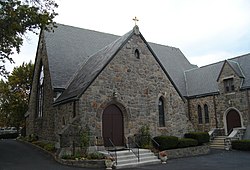


Quincy ( KWIN-zee) is a city in Norfolk County, Massachusetts, United States. It is the largest city in the county. Quincy is part of the Greater Boston area as one of Boston’s immediate southern suburbs. Its population in 2020 was 101,636, making it the seventh-largest city in the state. Known as the “City of Presidents”, Quincy is the birthplace of two U.S. presidents—John Adams and his son John Quincy Adams—as well as John Hancock, the first signer of the Declaration of Independence and the first and third governor of Massachusetts.
First settled in 1625, Quincy was briefly part of Dorchester before becoming the North Precinct of Braintree in 1640. In 1792, Quincy was split off from the Town of Braintree and was incorporated separately as the Town of Quincy; the new town was named after Colonel John Quincy, maternal grandfather of Abigail Adams and after whom John Quincy Adams was also named. Quincy became a city in 1888.
For over a century, Quincy was home to a thriving granite quarrying industry; the city was also the site of the Granite Railway, the United States’ first commercial railroad. Shipbuilding at the Fore River Shipyard was another key contributor to the city’s economy. In the 20th century, both Howard Johnson’s and Dunkin’ Donuts were founded in the city. Today, Quincy has developed into both a vibrant immigrant destination and a suburban business hub, and is considered attractive due to its safety, relatively large housing stock, and extensive connections to Boston.
ABOUT Quincy, MA
The road that eventually became the Old Coast Road from Boston to Plymouth, going through Quincy and Braintree, started out as a native american trail.
Massachusett sachem Chickatawbut had his seat on a hill called Moswetuset Hummock prior to the settlement of the area by English colonists, situated east of the mouth of the Neponset River near what is now called Squantum. It was visited in 1621 by Plymouth Colony commander Myles Standish and Squanto, a native guide.
Four years later, a party led by Captain Richard Wollaston established a post on a low hill near the south shore of Quincy Bay east of present-day Black’s Creek. The settlers found the area suitable for farming, as Chickatawbut and his group had cleared much of the land of trees. (The Indians used the name Passonagessit (“Little Neck of Land”) for the area.) This settlement was named Mount Wollaston in honor of the leader, who left the area soon after 1625, bound for Virginia.
The Wollaston neighborhood in Quincy still retains Captain Wollaston’s name. Upon the departure of Wollaston, Thomas Morton took over leadership of the post. Morton’s history of conflict with the Plymouth settlement and his free-thinking ideals antagonized the Plymouth settlement, who maligned the colony and accused it of debauchery with Indian women and drunkenness. Morton renamed the settlement Ma-re-Mount (“Hill by the Sea”) and later wrote that the conservative separatists of Plymouth Colony to the south were “threatening to make it a woefull mount and not a merry mount”, in reference to the fact that they disapproved of his libertine practices. In 1627, Morton was arrested by Standish for violating the code of conduct in a way harmful to the colony. He was sent back to England, only to return and be arrested by Puritans the next year. The area of Quincy now called Merrymount is located on the site of the original English settlement of 1625 and takes its name from the punning name given by Morton.
The area was first incorporated as part of Dorchester in 1630 and was briefly annexed by Boston in 1634. The area became Braintree in 1640, bordered along the coast of Massachusetts Bay by Dorchester to the north and Weymouth to the east. Beginning in 1708, the modern border of Quincy first took shape as the North Precinct of Braintree.
Following the American Revolution, Quincy was officially incorporated as a separate town named for Col. John Quincy in 1792, the grandfather of Abigail Adams and was made a city in 1888. Quincy, Massachusetts, is the only one of 17 cities named Quincy in the United States whose residents pronounce the name as “KWIN-zee” rather than “KWIN-see”. In 1845 the Old Colony Railroad opened; the Massachusetts Historical Commission stated that the railroad was “the beginning of a trend toward suburbanization”. Quincy became as accessible to Boston as was Charlestown. The first suburban land company, Bellevue Land Co., had been organized in northern Quincy in 1870. Quincy’s population grew by over 50 percent during the 1920s.
Among the city’s several firsts was the Granite Railway, the first commercial railroad in the United States. It was constructed in 1826 to carry granite from a Quincy quarry to the Neponset River in Milton so that the stone could then be taken by boat to erect the Bunker Hill Monument in Charlestown. Quincy granite became famous throughout the nation, and stonecutting became the city’s principal economic activity. Quincy was also home to the first iron furnace in the United States, the John Winthrop Jr. Iron Furnace Site (also known as Braintree Furnace), from 1644 to 1653.
In the 1870s, the city gave its name to the Quincy Method, an influential approach to education developed by Francis W. Parker while he served as Quincy’s superintendent of schools. Parker, an early proponent of progressive education, put his ideas into practice in the city’s underperforming schools; four years later, a state survey found that Quincy’s students were excelling. Many of Quincy’s teachers were recruited by districts in other states, spreading the Quincy method beyond Massachusetts to New Jersey, New York, Connecticut, Vermont, Florida, Minnesota, and other places.
Quincy was additionally important as a shipbuilding center. Sailing ships were built in Quincy for many years, including the only seven-masted schooner ever built, Thomas W. Lawson. The Fore River area became a shipbuilding center in the 1880s; founded by Thomas A. Watson, who became wealthy as assistant to Alexander Graham Bell in developing the telephone, many famous warships were built at the Fore River Shipyard. Amongst these were the aircraft carrier USS Lexington (CV-2); the battleships USS Massachusetts (BB-59), now preserved as a museum ship at Battleship Cove in Massachusetts, and USS Nevada (BB-36); and USS Salem (CA-139), the world’s last all-gun heavy warship, which is still preserved at Fore River as the main exhibit of the United States Naval Shipbuilding Museum. John J. Kilroy, reputed originator of the famous Kilroy was here graffiti, was a rivet inspector at Fore River.
Quincy was also an aviation pioneer thanks to Dennison Field. Located in the Squantum section of town it was one of the world’s first airports and was partially developed by Amelia Earhart. In 1910, it was the site of the Harvard Aero Meet, the second air show in America. It was later leased to the Navy for an airfield, and served as a reserve Squantum Naval Air Station into the 1950s. The Army has also long maintained a presence in the city, with the Massachusetts Army National Guard occupying the Kelley Armory in Wollaston, from 1971 to 1976 it served as headquarters for the 187th Infantry Brigade.